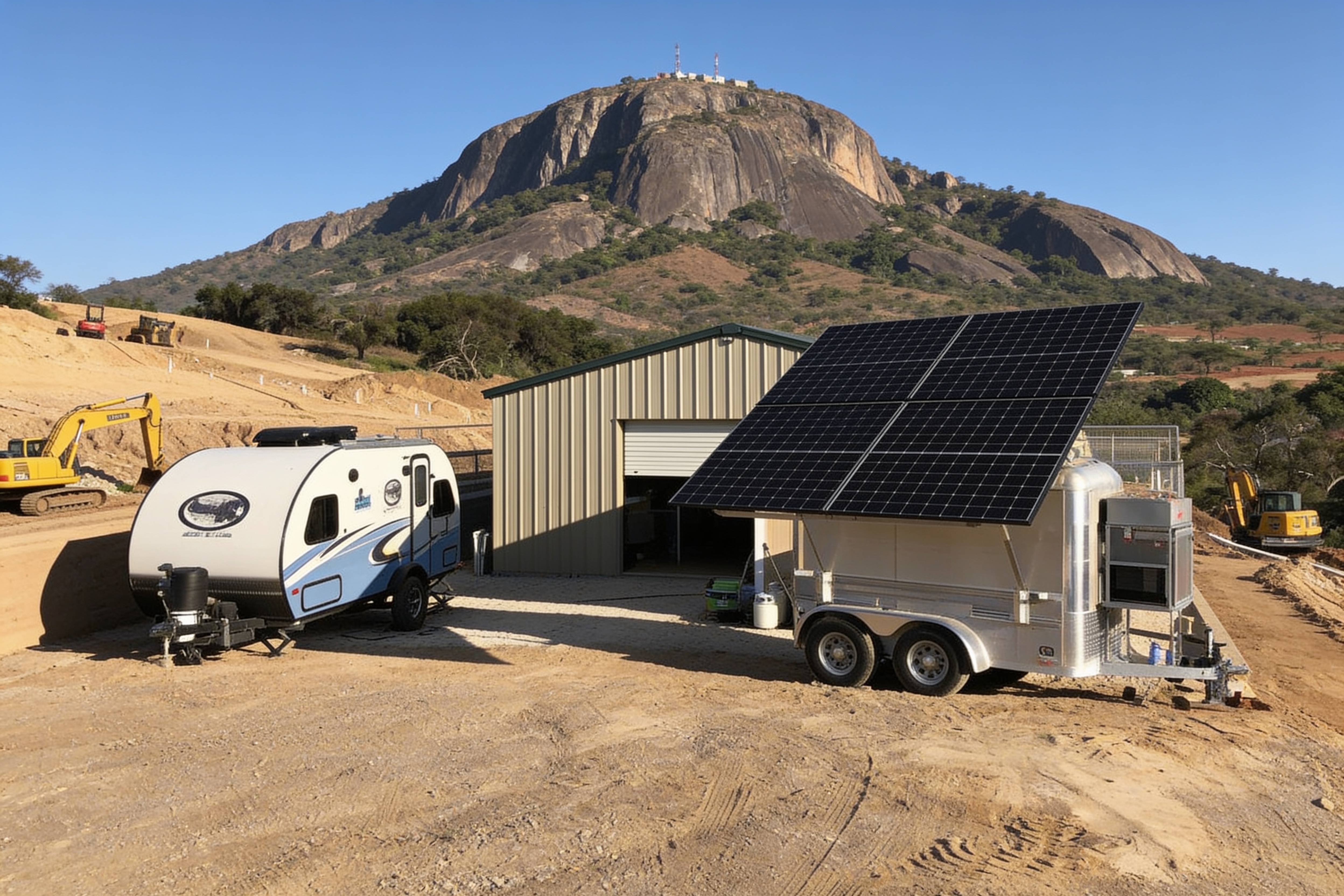
SunRent educational guide. Equipment capabilities, availability and rental terms should be confirmed for your specific project.
1. Calculate the energy demand
Identify all expected loads and their power ratings. Estimate the hours each load will run and whether the loads operate simultaneously.
Pay attention to critical equipment that must remain powered and to starting surges from motors or pumps.
2. Consider sunlight and charging
For solar-based equipment, available sunlight and site conditions can affect energy production. Shade, dust, seasonal weather and panel placement may be relevant.
Ask how the system is charged and what operating limits apply when solar energy is insufficient.
3. Plan the physical site
Check road access, unloading space, ground conditions, security, exposure to weather and room for equipment placement.
Share site photographs or other practical information if requested during the equipment-selection process.
4. Think about maintenance and support
At a remote location, a minor problem can be difficult to address if spare equipment, technical support or transport is not readily available.
Confirm the maintenance responsibilities, support arrangements and contact process before entering into a rental agreement.
5. Plan for changing requirements
The power demand may increase as a remote project develops. Explain the expected project phases and any loads that may be added later.
Confirm whether the selected equipment can accommodate those requirements or whether a different arrangement would be needed.
Next Steps
A remote-power enquiry should include the site location, equipment list, energy demand, expected operating hours and access constraints. Confirm system capabilities and rental terms before deployment.