Start with Your Power Requirements
The right generator size depends on the equipment you need to operate, how much power it consumes, and whether any equipment requires a high starting current.
Battery capacity is another important consideration. It indicates stored energy, while inverter capacity describes the system's apparent-power rating. Both must be considered when planning a power system.
Use the comparison below to explore SunRent's available model range. A final selection should be based on your actual load requirements and expected operating conditions.
Compare All Nine Generator Sizes
Compare inverter ratings and battery storage, then open a product page for more information.
SRX-9 Solar Generator
SRX-12 Solar Generator
SRX-15 Solar Generator
MS-200
MS-415
MS-422
MS-425
MS-432
Specifications shown are based on SunRent's supplied nine-size lineup. Confirm the final configuration and applicable specifications with SunRent before booking.
How to Estimate the Size You Need
These checks can help you prepare useful information before requesting a quotation.
List Your Equipment
Write down the appliances, tools, machinery, lighting, pumps and other equipment that will run on the power system.
Calculate the Operating Load
Record each item's power rating and consider which items will operate simultaneously. Motors and compressors may require additional starting power.
Estimate Operating Hours
Explain how many hours the equipment must run, whether it operates overnight and whether solar charging or another charging source will be available.
What Do kVA and kWh Mean?
Inverter capacity — kVA
Kilovolt-amperes (kVA) express apparent-power capacity. The appropriate rating depends on the connected load, power factor, starting current and the system's operating limits.
Battery capacity — kWh
Kilowatt-hours (kWh) express stored energy. The energy available to your equipment depends on usable battery capacity, conversion losses, discharge limits and the actual power consumed.
Why both matter
A system may have sufficient stored energy but insufficient inverter capacity for a particular load. Conversely, a large inverter does not guarantee long operating time if the load uses energy quickly.
Information to Prepare
- Equipment list and power ratings
- Expected simultaneous load
- Motor starting or surge requirements
- Required daily operating hours
- Site location and application
- Charging arrangements and rental duration
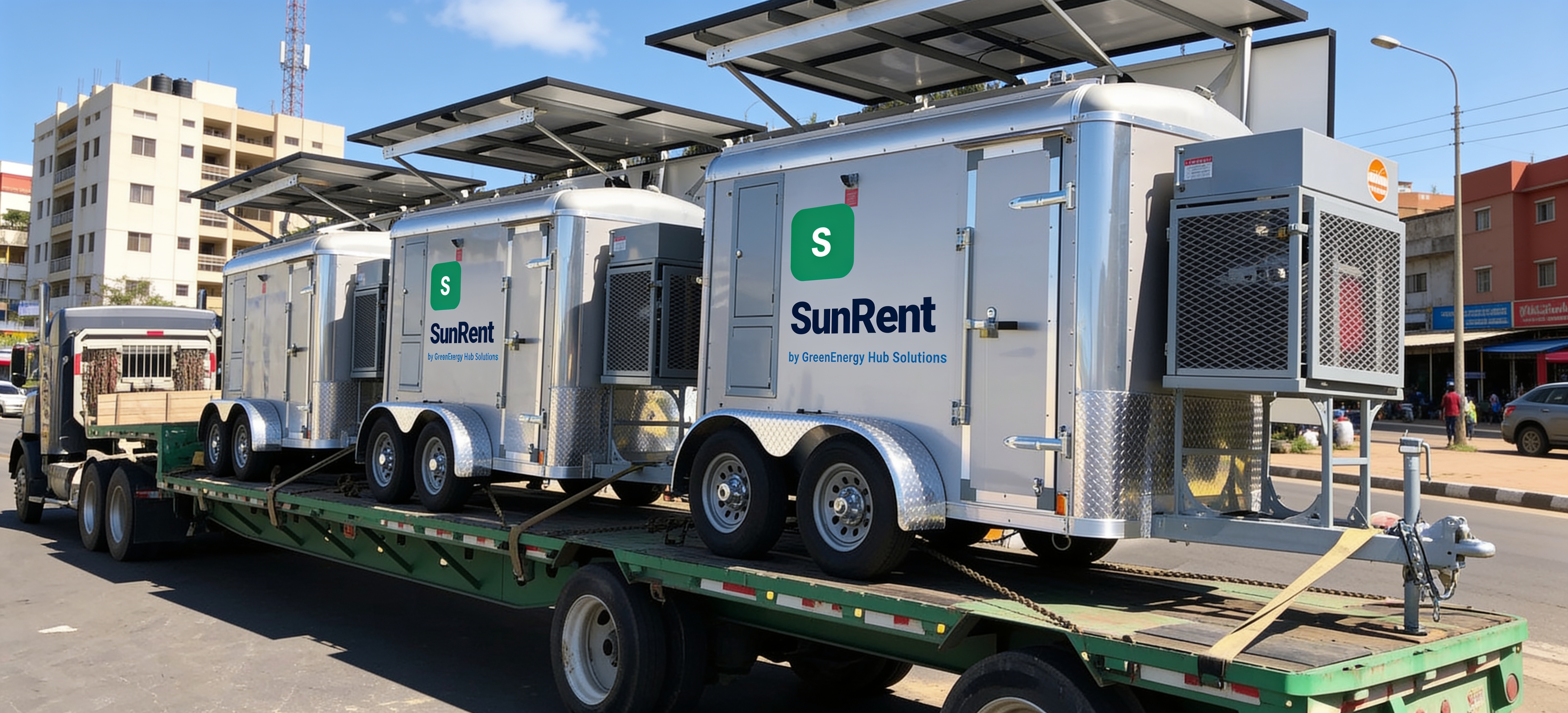
Tell Us What You Need to Power
The correct configuration depends on the project and operating conditions, not just the equipment's name or size.
Construction and Industrial Sites
Include tools, pumps, compressors, machinery, site lighting and other loads that may operate at the same time.
Events and Temporary Installations
Consider sound equipment, lighting, catering, cooling, display systems and the expected duration of the event.
Remote and Off-Grid Operations
Consider daily energy consumption, available charging opportunities, overnight demand and the consequences of interruptions.
Frequently Asked Questions
Does a larger kVA rating mean longer runtime?
Not necessarily. kVA describes apparent-power capacity, while runtime depends on usable battery energy, actual load, conversion losses and operating conditions.
How do I estimate how long a battery will last?
A rough estimate compares usable battery energy with the average power consumed. Actual runtime will vary with system losses, discharge limits, load changes and charging conditions.
Can I choose a generator using kVA alone?
No. You should also assess battery capacity, simultaneous loads, starting current, operating hours and the intended application.
Can SunRent help me select a size?
Yes. Provide your equipment list, power ratings, operating hours, location and intended rental duration through the contact page so your requirements can be reviewed.
Request a Generator Rental Quotation
Share your power requirements and project details with SunRent to discuss a suitable configuration and rental arrangement.