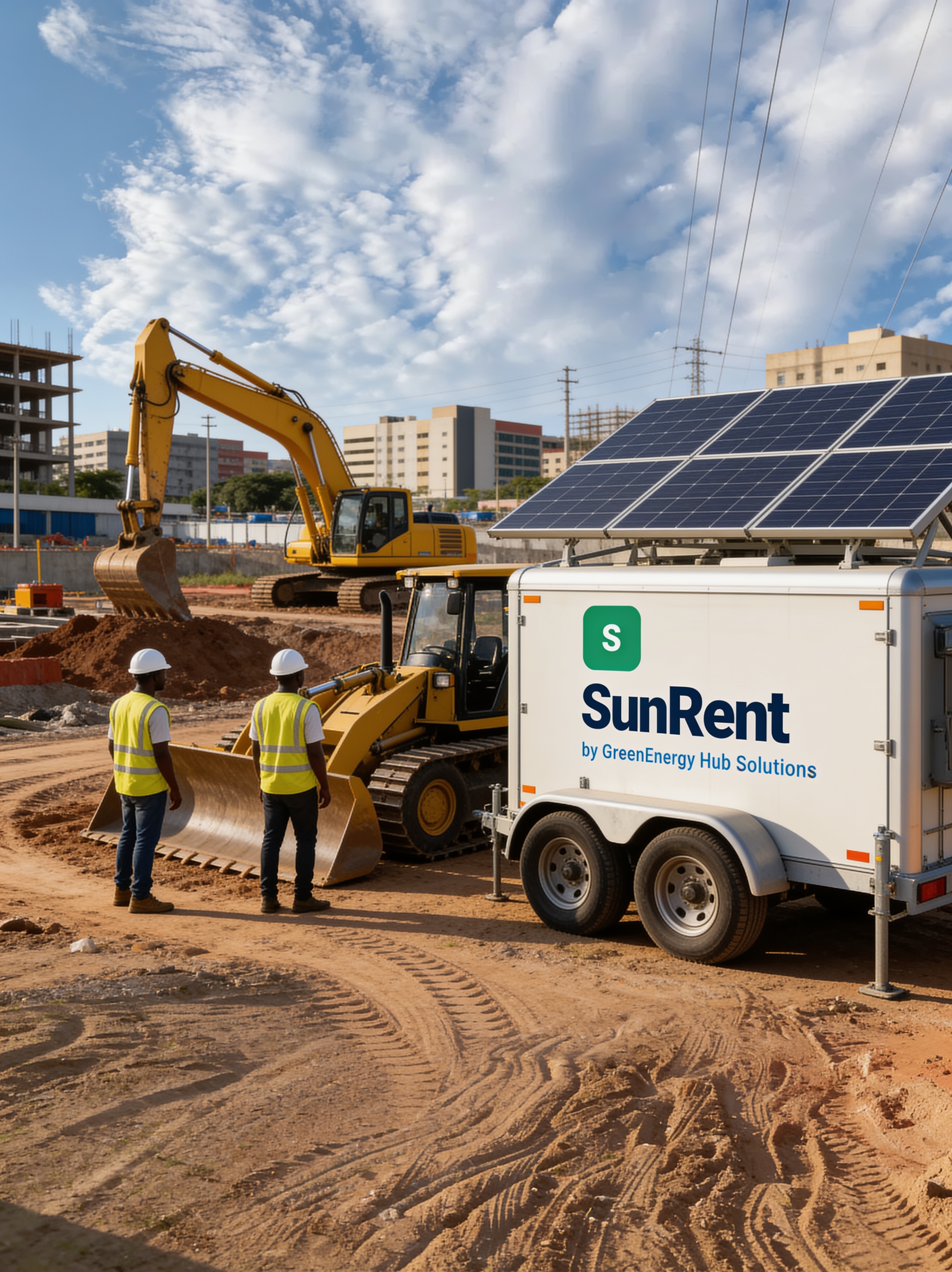
SunRent educational guide. Equipment capabilities, availability and rental terms should be confirmed for your specific project.
1. Identify the equipment and tasks
List the tools, pumps, lighting, communication equipment and other loads that require power.
Record each item’s power rating and starting requirements. Some equipment may require substantially more power when starting than during normal operation.
2. Plan for the work schedule
Consider when power is needed, how many hours equipment operates and whether multiple loads will run together.
Construction schedules may change, so explain any expected changes in demand or operating hours when discussing a rental.
3. Review site conditions
Consider access roads, working space, equipment placement, exposure to dust and rain, and the requirements of the worksite.
The installation must follow the equipment instructions and applicable electrical and site-safety requirements.
4. Compare power options
Evaluate available equipment against the actual load, operating duration, charging needs and site conditions.
Do not select equipment based on a model name or appearance alone. Confirm the relevant specifications and compatibility.
5. Clarify the rental arrangement
Confirm rental duration, delivery access, installation responsibilities, maintenance, support and the process for reporting a problem.
Include any additional equipment or services in the quotation so the project team can assess the total cost.
Next Steps
Prepare a list of construction loads, operating hours, site location and project dates before contacting SunRent. Equipment availability, suitability and rental terms must be confirmed for your particular project.