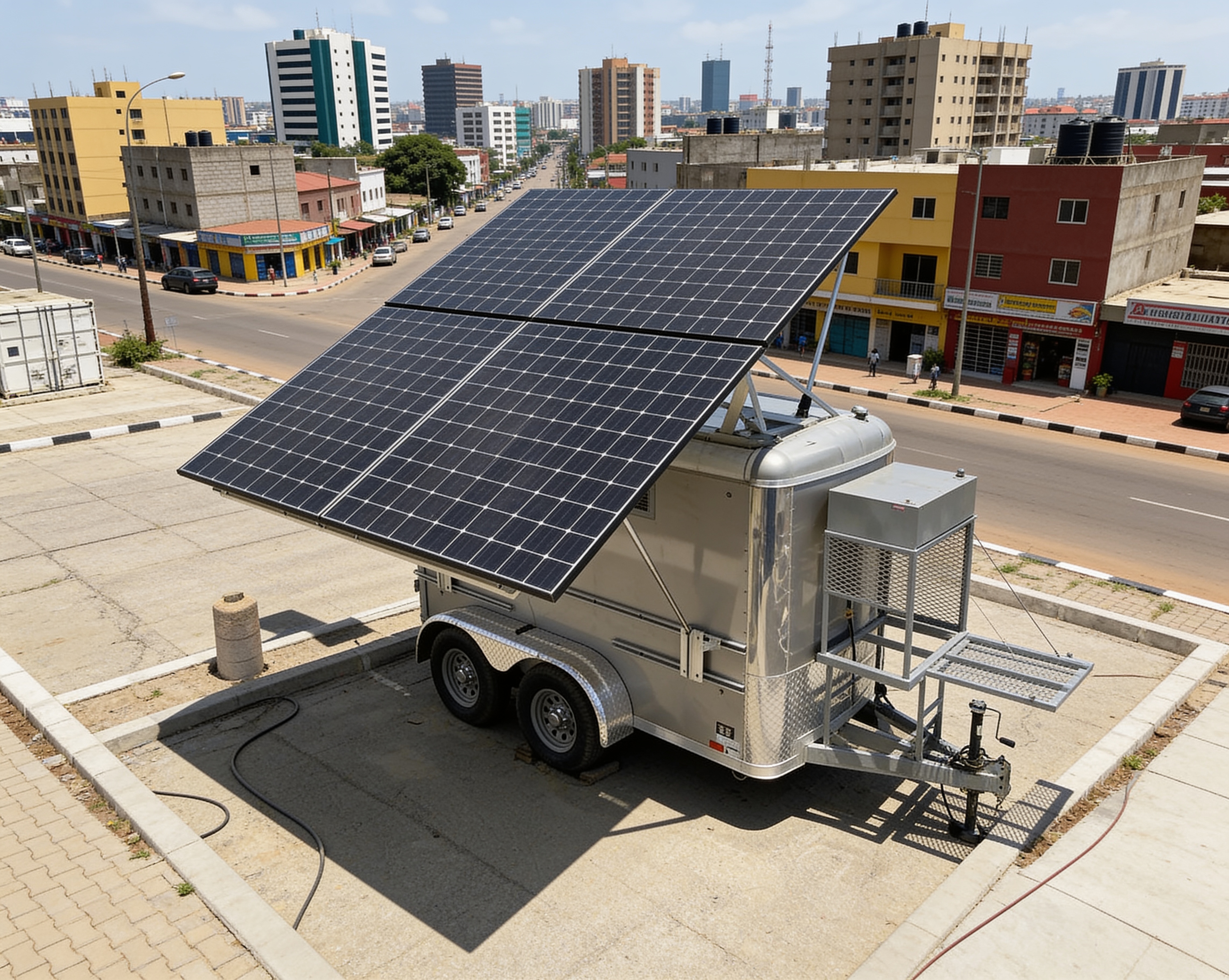
SunRent educational guide. Equipment capabilities, availability and rental terms should be confirmed for your specific project.
1. Compare the load and runtime
Calculate the power required by your equipment and the hours it must operate.
For a solar-based system, assess energy storage and charging needs. For a diesel generator, consider its rated output and the load-dependent fuel consumption information supplied by the manufacturer.
2. Understand operating costs
Compare the complete rental cost and any additional expenses relevant to each option.
For diesel equipment, fuel use, fuel delivery and maintenance may affect operating costs. For solar-based equipment, charging arrangements, storage limitations and the available energy source should be considered.
3. Consider noise and emissions
Diesel generators produce engine noise and exhaust emissions during operation. Solar equipment may reduce reliance on engine operation, depending on its design and charging arrangement.
Check the actual equipment specifications and any site rules for noise, ventilation, emissions and environmental protection.
4. Review the operating environment
Sunlight availability, shade, dust, rain, temperature, ventilation and equipment placement can affect suitability.
Consider whether the system can meet the required load during periods when solar charging is limited, and what alternative charging or backup arrangements may be needed.
5. Compare the full rental arrangement
Ask for the rental price, delivery terms, included accessories, maintenance responsibilities and support arrangements for each option.
The lowest initial price is not necessarily the lowest total project cost. Compare options against the same load, duration and site requirements.
Next Steps
Neither option is automatically best for every project. Compare equipment capability, operating duration, site conditions, noise, emissions and total cost, then confirm suitability with the equipment provider.